Back to Articles Menu
Job Seekers, Welcome to Health Career Center
Resources
Recent Articles
Career Planning
Career Learning Center
Reference Checking
Resume Writing Services
Coaching
ISTOCK.COM/REDTEA
Overlooked No More
05/26/2026Opportunities, Impact, and Unique Rewards of Rural Podiatry
Reprinted with permission from APMA News, January/February 2026.
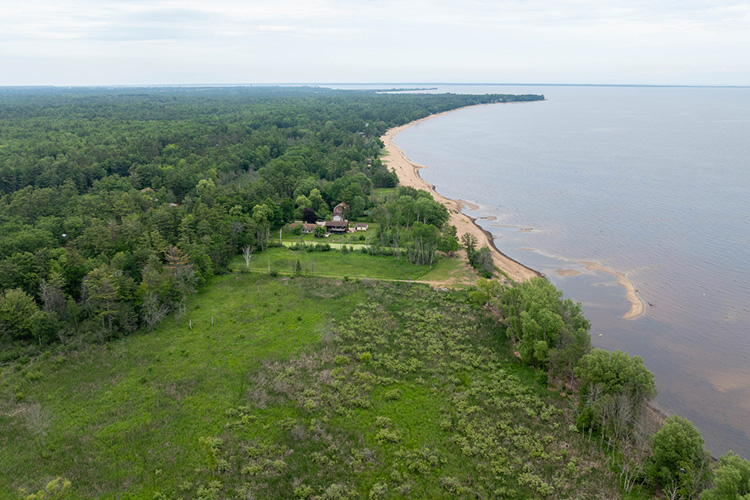
While many job seekers limit their searches to urban and suburban areas, practicing in a rural area offers a unique set of benefits that could make it an ideal setting: Rural regions boast a lower cost of living, less competitive job markets, the ability to have an outsized impact on your community, and the potential opportunity to treat more diverse cases. While many eschew rural areas because of a perceived lack of entertainment options, those who enjoy outdoor activities find that rural areas offer the perfect antidote to an increasingly digital world dominated by screen time.
APMA News sat down with Jake Eisenschink, DPM, a member of the new Emerging Leaders Program cohort, to discuss the opportunities and challenges of practicing in a rural area. Dr. Eisenschink believes more podiatrists need to look more closely at the pros and cons of working in a rural area because many are missing out on a golden opportunity. For him, taking the path less traveled has given him both career and life satisfaction, and he has been able to embed himself within the community in a way that he believes would be much harder to achieve in the big city.
When Dr. Eisenschink finished his podiatric residency training at St. John Hospital in Detroit, he didn’t imagine he’d one day be practicing medicine in one of the most remote corners of Michigan. But life—and family—guided him north to the Upper Peninsula of Michigan, where he now cares for patients in Escanaba alongside his wife and father-in-law.
“We’re really in the middle of nowhere,” he said with a laugh. “Green Bay is almost three hours away. Marquette’s an hour. For a lot of our patients, we’re the only option.”
That isolation shapes nearly every aspect of his daily work. It also creates the sense of community that keeps him committed to rural podiatry and makes his job more rewarding.
Small Town, Big Need
Dr. Eisenschink’s practice is unusually surgical for its size. Conditions that might be caught early in suburban or urban areas often present in advanced forms by the time they reach him in an area where many patients put off going to the doctor’s office when symptoms first arise.
“The people here are hard-working, outdoors-type folks,” he explained. “They don’t complain, and they put things off until they just can’t anymore. So instead of treating a mild bunion, I’m treating severe deformities, chronic pain, things that have been building for 10 years.”
The lack of access is partly geographic—and partly cultural. When patients must drive two or three hours for care, they often wait. Snowstorms, icy roads, and deer crossings add another layer of risk. Many patients prefer to avoid the trip altogether. But Dr. Eisenschink’s practice has been a godsend for patients in the area. “When I tell them, ‘No, you don’t have to go to Green Bay for that ankle fracture—we can do it right here,’ they’re shocked,” he said. “I hear, ‘Thank you for being here,’ all the time. I don’t think they’re used to having a specialist close by; they are used to being ignored or overlooked, and you can see their appreciation to have access to care closer to home.”
Work Follows You Everywhere
With that sense of closeness, however, comes a unique challenge: privacy. “In a small town, everyone knows every-one,” Dr. Eisenschink said with a chuckle. “If you see one patient, suddenly you see their brother, sister, aunt, uncle. It’s great for business, but you also see all of them at the grocery store. You’re just trying to buy a loaf of bread, and someone comes up asking about their foot. You never really get away from it.”
Drawing a line between his private and professional life can be difficult at times, but Dr. Eisenschink sees this blurring of boundaries as net positive: “Being in a small community allows you to really embed yourself within it. You become one big family, and I can have an outsized impact on people I don’t think I would see in the city. It provides you a lot more opportunities to be a leader and help others out, and I think a lot of podiatrists don’t recognize that.”
Dr. Eisenschink also thinks that podiatrists need to reassess the benefits of rural podiatry: Too often he hears about just the negatives of living in a rural area. The region’s outdoor activities, natural beauty, and “quiet living” are ideal for starting a family or for those looking for a change of pace from the city. He acknowledged, though, that the setting can be difficult for young practitioners seeking nightlife, pro sports, or big-city amenities. “For some, if you don’t have family here or you’re not outdoorsy, it might be tough long-term.” Still, some rural health-care practitioners have found a way to have their cake and eat it too: Some doctors live in urban areas and commute to rural areas to practice a couple of days a week before returning home. “You can think outside the box if you want to help a rural community but aren’t sure if you want to commit to living there 24/7,” Dr. Eisenschink explained.
Practicing to the Fullest Extent of Your Training
One of the most striking differences between rural and urban practice is the breadth of medicine Dr. Eisenschink finds himself practicing. “We don’t have an infectious disease specialist within 100 miles,” he said. “So, I’m managing IV antibiotics. Same with vascular—none nearby. Rheumatology is hard to access. I suddenly find myself handling rheumatoid medications and monitoring things far outside what a podiatrist would typically do in a city.”
This challenge is something he craves, and he finds it rewarding to tap the full extent of his podiatric medical training at his practice. He didn’t get into podiatry to perform the same treatments every day, and practicing in a rural area has provided him the opportunity to continue to learn and expand the boundaries of his medical knowledge. “Every day is fresh. You’re not just treating feet—you’re treating the whole person because no one else is available. It’s global medicine,” Dr. Eisenschink explained and added, “You find yourself taking on the character of the place you live: I’ve become more like my patients and community and am more independent and resourceful as a doctor now.”
Strengthening the Rural Care Network and Advocacy
Asked how colleagues in suburban and urban areas can support rural podiatrists, Dr. Eisenschink highlighted connection. “When you’re up here in the boondocks, you don’t always know who does what,” he said. “Who’s the best vascular surgeon? Who’s the Charcot expert? Which colleague does flaps? That’s information that spreads easily in cities—but not so much out here.”
Dr. Eisenschink encouraged practitioners statewide to reach out to rural colleagues, introduce themselves, and share expertise. “I get texts from Detroit asking, ‘Hey, who can this patient follow up with in your area?’ That connection is vital.”
Dr. Eisenschink also believes colleagues should join rural podiatrists in advocating for common sense deregulation that reduces patient burdens. Many regulations have been created with health care for large cities in mind; these become more onerous in rural areas where patients can live hours away from care options. “Take diabetic shoes,” he said. “A patient drives two hours. I measure them. But then they have to go get a primary care signature and drive back. The primary care doctor sent them to me in the first place—why do I need their signature again? It makes no sense.”
In a city, this may not be as burdensome when doctors’ offices are close to one another, but in rural areas, this is not often the case. These extra steps cost patients time, put strain on staff, and delay care—delays that, Dr. Eisenschink warned, can contribute to preventable amputations. “Urban colleagues see how much extra work rural docs are doing. Their support matters.”
The Future of Rural Podiatry
Despite the challenges, Dr. Eisenschink sees opportunity for the next generation of podiatrists. “Residents want big cities—that’s the trend. But in rural areas, you can actually make more money, you get incredibly diverse cases, and patients deeply appreciate you. You become ‘their doctor’ in a way that’s rare elsewhere.”
The key, he said, is to spotlight the positives. The professional fulfillment. The variety. The relationships. The impact. “Rural podiatry isn’t just a job,” he said. “It’s a calling. And once you’re here, you realize how rewarding it really is. You have an opportunity to shape your community, and you will find they shape you as well.”